



I have inspected a system that worked exactly as written and failed to stop the thing it was written for. Scotland will recognise the species.
A report going to Renfrewshire Council’s Infrastructure, Land and Environment Policy Board on Wednesday says no flood warning was issued for Renfrew before Storm Boelo and no exceptional tidal concern emerged through the local resilience arrangements. The council and the Scottish Environment Protection Agency will now review the forecast, warning system, operating rules and wider flood resilience. The river has been invited to explain its deviation from the paperwork.
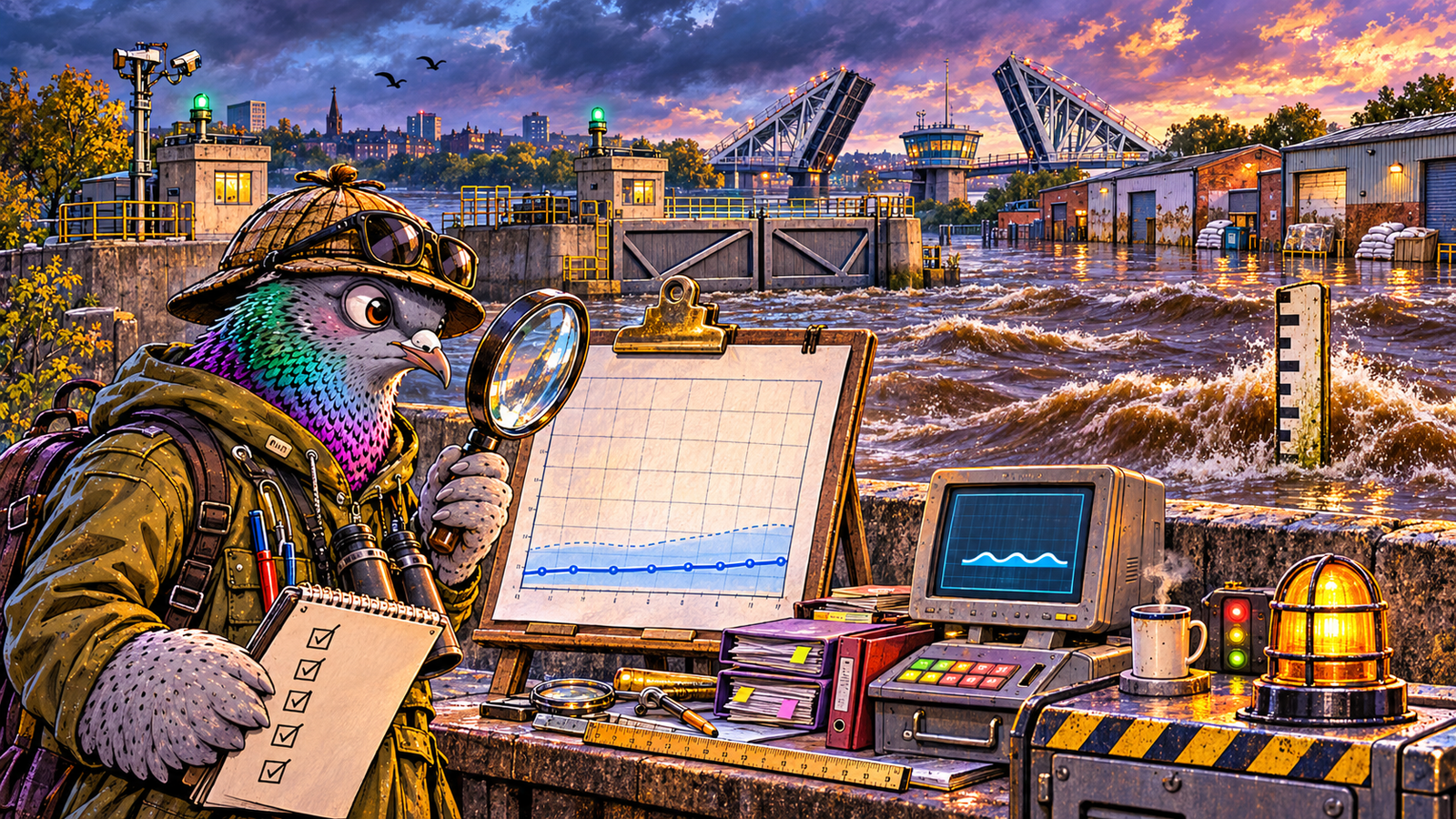
The highest available forecasts for Renfrew, adjusted for land levels, were between 2.2m and 2.42m. Council staff were due to attend the flood barrier when a forecast reached 3.6m, with the barriers raised at 3.9m. The tide was eventually recorded at 4.49m. By the time the graph found the emergency, the emergency had found Ferry Road.
Readers may also have seen the same surge reported as 6.7m. That is not a second, taller flood. SEPA says its Renfrew gauge datum sits 2.21m below Ordnance Datum, so a reading around 6.7m at the gauge is about 4.49m AOD. The Clyde has one water level and two respectable ways of frightening a sub-editor.
The barriers were not activated. The report says the operating process had grown out of assessments, past events and a decade of experience. There had been 45 amber or red weather warnings for Strathclyde since 2016, but none met the barrier threshold. Officers followed the established procedure correctly. The established procedure, unfortunately, had followed a forecast that was more than two metres short.
Thirteen businesses are known to have suffered water ingress. Eight sit on the river side of the Ferry Road barriers and would have flooded even if the system had been raised. The council says it offered support to every business it could contact, sent staff to remove waste and understands that ten have reopened. Those are premises and livelihoods, not props for a municipal punchline.
The damage that shut the £117m Renfrew Bridge is a separate question. The council says the barrier decision did not cause the water ingress into the bridge’s southern plant room. The crossing remains closed to road users for months, and because it is still within its two-year defects period, the contractor and council insurers are examining whether a defect contributed. The river has therefore opened a second file.
For now, the council has lowered the threshold for sending teams to inspect conditions and raise the barriers if needed. The review will consider the cost and disruption of acting earlier when a forecast may turn out to be harmless. False alarms are inconvenient. A record tide, 13 flooded businesses and a new swing bridge stuck open have submitted the competing estimate.
This report does not establish negligence and it does not yet explain why the forecast missed so badly. It does establish the questions in useful order: what information reached whom, why no local flood warning appeared, whether thresholds built from the last decade still fit the next one, and how the bridge plant room took water while the crossing was still under defects cover. Climate resilience cannot mean admiring the procedure after the climate has ignored it.
Councillors are due to consider the paper on 4 November. The review needs to return with more than another reassuring chart. Renfrew has already seen what happens when the blue line behaves impeccably and the Clyde does not.