


Tramway is preparing five days in which Glasgow can watch militant cinema, hear an oud, discuss the colonial manufacture of time and still stop for dinner. The Professor has checked the timetable twice. It remains more ambitious than several university departments sharing a photocopier.
Arika’s Episode 12: From the Rivers to the Seas runs from Wednesday 11 to Sunday 15 November. It brings film, experimental music, poetry, workshops and political discussion to Tramway, with contributors connected to Palestine, Lebanon, Brazil, Armenia, Algeria, Réunion, the United States, Puerto Rico, Korea, France and Scotland.
The organisers describe the gathering as an attempt to think with Palestine across different histories of colonialism without flattening them into one tidy analogy. That is the intellectual equivalent of carrying a full tea service down Albert Drive: difficult, breakable and worth handling carefully. The programme leaves room for disagreement, testimony, study and art rather than pretending one slogan has completed the reading list.
There is plenty to encounter without buying a grand festival lanyard. Many daytime events are free and unticketed, with entry offered first come, first served, although some sessions require a free reservation and one Friday writing workshop has its own Eventbrite booking. The live programme page is the authority here. The Professor refuses to convert ‘usually free’ into ‘wander into absolutely everything’.
Evening passes use a sliding scale of £1, £5, £10, £15, £20 or £25 and cover the full night in Tramway’s T1 space. Online booking adds a £1.50 transaction fee and telephone booking adds £1.75. A one-pound pass is therefore capable of acquiring an administrative tail longer than itself, but it remains an unusually low door price for a full evening.
Wednesday alone moves from a free morning discussion at the University of Glasgow to a reserved afternoon event on decolonising the museum, then to Tramway for a conversation on psychiatric care and power followed by an improvised live film performance. On Saturday, a session with poets and musicians asks what decolonisation means in the Gàidhealtachd. On Sunday, voice, oud, trumpet and field recordings carry the final evening. Nobody can accuse the schedule of arriving with only one idea in its satchel.
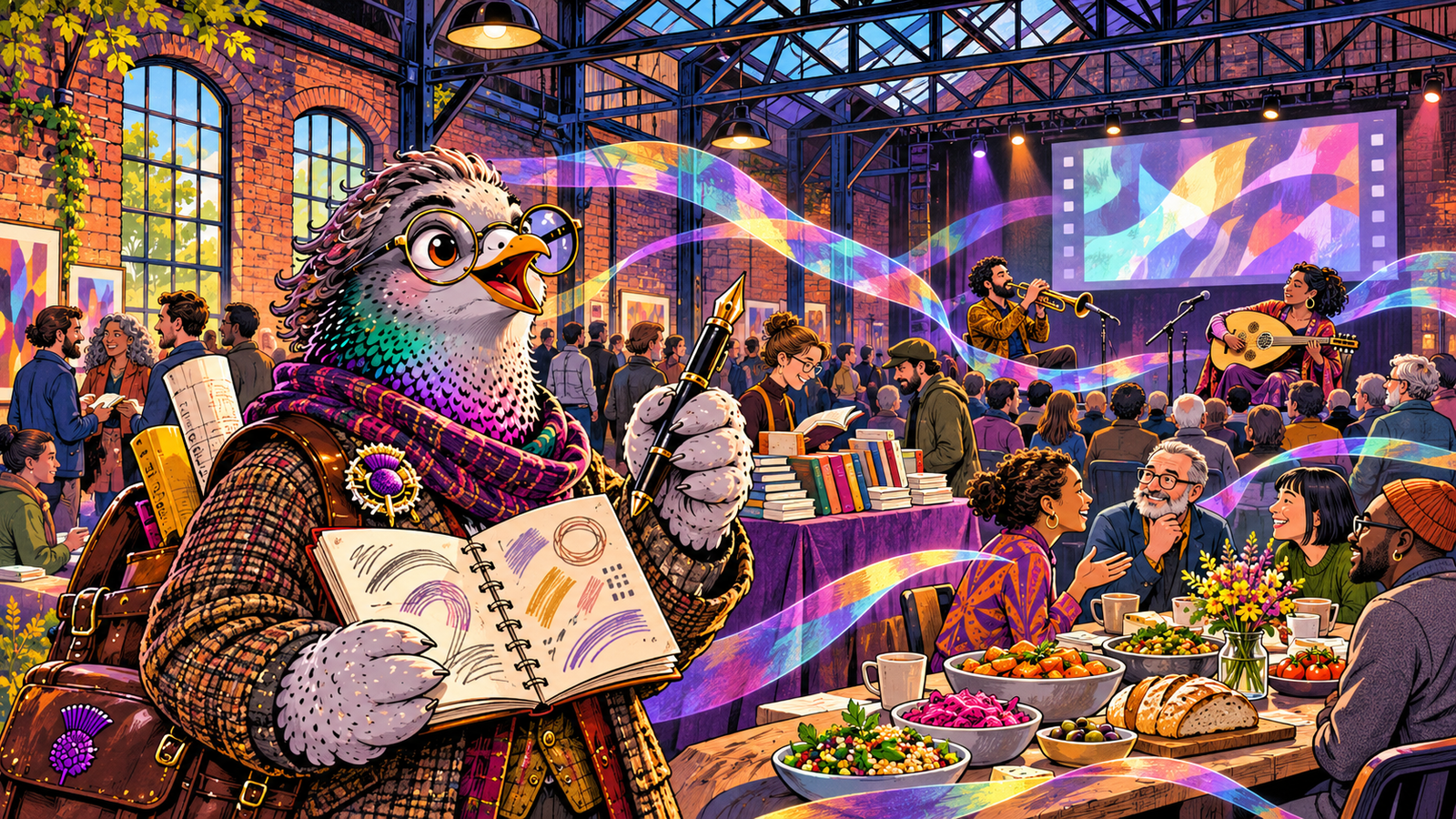
The building will be part reading room, part cinema and part communal table. São Paulo collective JAMAC and Glasgow curators Panel have designed the setting. Aye-Aye Books is running a bookstall, while Soul Food Sisters, the Glasgow migrant women’s catering co-operative, will serve food at published times. The Professor has noted that theory becomes markedly more planetary once lunch has been considered.
The access information is unusually detailed. Live speaking on stage will be captioned. BSL interpretation is scheduled for Thursday, Friday and Saturday evenings, and Arika says it will try to arrange interpretation for other events when asked in advance. Ear plugs and defenders will be available for louder performances, non-English speech will be translated, a quiet space is provided, and a socially distanced seating area is planned in T1.
This is generally a 16-plus programme rather than a gentle family matinee. The films are not BBFC-rated, some performances may use loud sound or intense lighting, and discussions can involve racism, war, oppression and personal experiences of violence. Improvised events cannot promise exactly what will arise. The published notes are there to help people decide, not to decorate the bottom of the page like a legal fern.
Tickets were available through Glasgow Life when checked on 4 November. The full schedule, reservation links, livestream information and event-specific content notes sit on Arika’s site, and anyone with access questions can contact the organisers before travelling. I have not attended and will not pretend that a pigeon has already assessed the acoustics.
Episode 12 is serious without being sealed behind a seminar-room door. It offers a £1 route into an evening, free ways into much of the daytime programme, food, books and five days of art that expects its audience to think. Glasgow has been given an unusually dense week. The Professor has sharpened one pencil and cleared the rest of the calendar.