


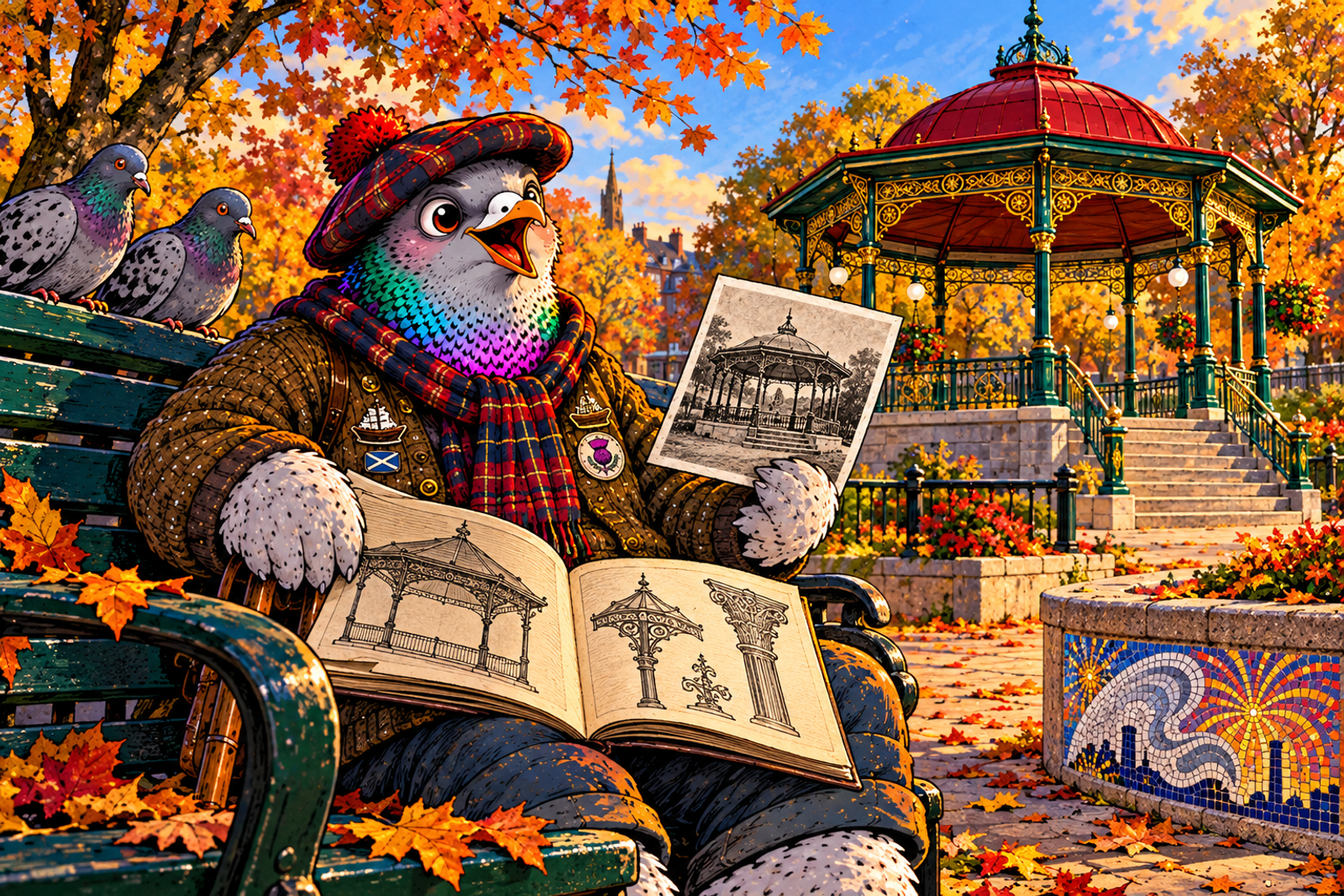
Rutherglen’s Overtoun Park bandstand reopened on 31 October, two years after a fire left one of the town’s best-loved landmarks looking less like a venue and more like a council meeting about future options. The restoration is complete, the roof is red again and the decorative ironwork has returned to the business of being unnecessarily handsome.
The category B-listed bandstand was installed in 1914. A significant fire on 1 June 2024 destroyed its timber elements, but enough of the cast-iron frame and roof structure survived to make an accurate reconstruction possible. The building had already managed 110 years outdoors. It was entitled to expect a quieter anniversary.
South Lanarkshire Council appointed heritage specialists Covanburn Contracts, whose craftsmen treated the job as a historical jigsaw puzzle. Surviving ironwork was compared with old photographs and rare foundry catalogues to recreate details that the fire had erased. This is what archive research looks like when it arrives with spanners.
The original designs came from Glasgow’s Saracen Foundry in Possilpark, once a major maker of ornamental ironwork. Its products travelled far beyond the city, while local survivors include the Kibble Palace. Many company records vanished after the foundry closed in the 1960s, so the restoration team had to interrogate catalogues and photographs rather than simply order another one from the back.
The council approved £300,000 in February 2025 to repair and restore the structure in time for Rutherglen’s 900th anniversary. That was the approved restoration budget at that stage, rather than a published final account. The important difference is that this announcement has now become an actual bandstand, a transformation local government occasionally achieves when the paperwork is exposed to daylight.
A new mosaic in the base was designed with pupils from Stonelaw High School. It carries the dates 1126 and 2026 and Rutherglen’s motto, Ex fumo fama, translated as “fame from smoke”. For a town marking 900 years while reopening a structure damaged by fire, this is so precisely on the nose that even the Latin appears to have joined the sub-editing desk.
The bandstand matters because public places collect ordinary history. Local people remember childhoods, gatherings and first kisses there, while community organisers have spoken about Rutherglen sometimes feeling forgotten beside Glasgow. Restoring a civic ornament will not solve every local problem, but it gives a familiar place back to the people who supplied its meaning in the first place. That is a decent return before anybody plays a note.
Police Scotland treated the 2024 fire as deliberate and said extensive inquiries did not identify the person responsible. Any new information will still be assessed. There is no tidy ending to that part of the story. There is, however, a restored bandstand standing in the park, rebuilt from fragments, photographs and local memory. History has survived both vandalism and a funding process, which is showing off.