

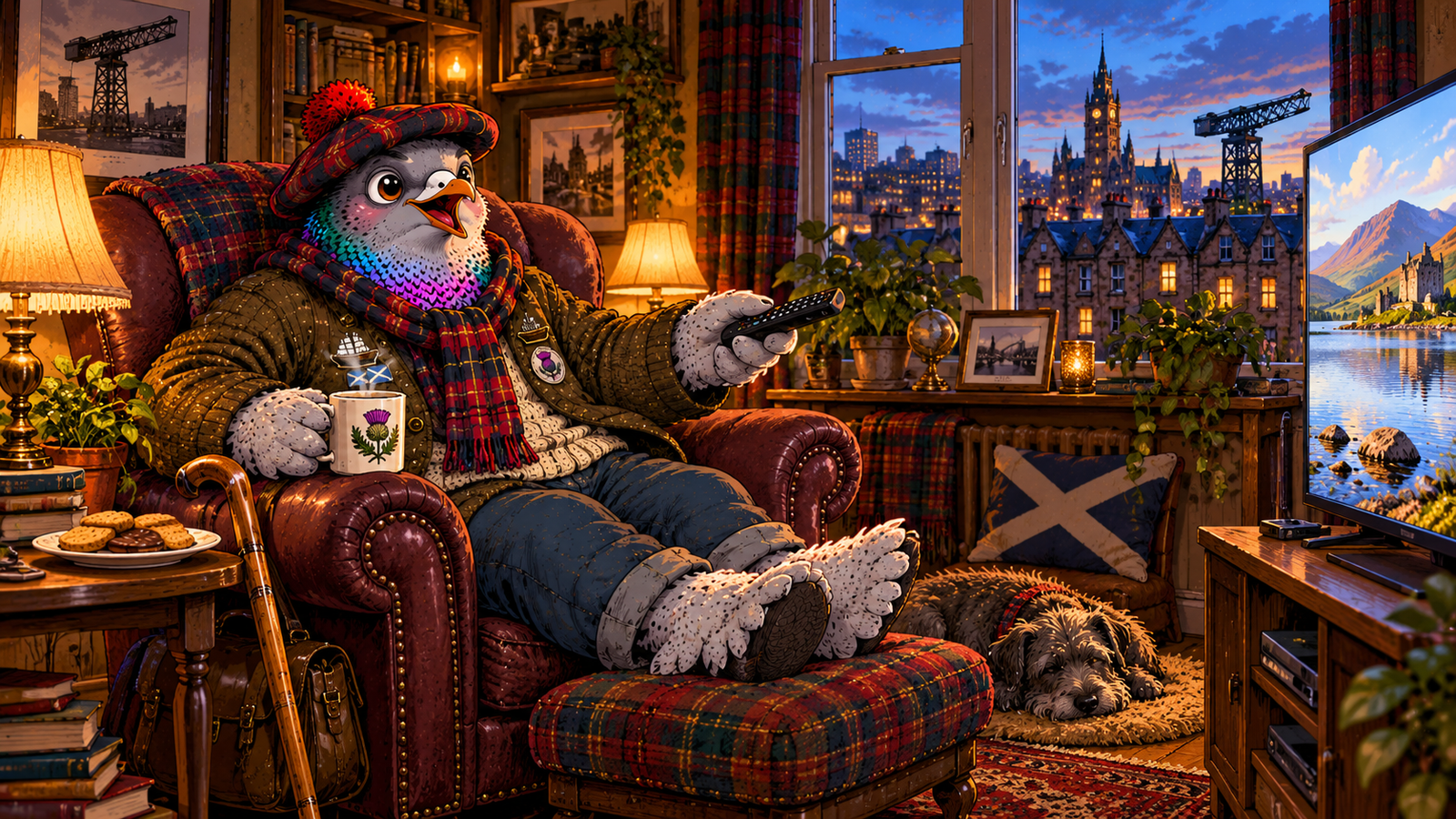
I remember when television finished.
Not a programme. Television.
The announcer said goodnight, somebody played the national anthem and that was you. Finished. Go to bed.
So you’ll forgive me if I don’t regard putting BBC Scotland on the internet as the collapse of civilisation.
I’ve survived colour television, Ceefax, satellite dishes, five channels becoming five hundred, VHS, Freeview and iPlayer. I’ll cope.
The BBC is expected to confirm tomorrow that the BBC Scotland television channel will stop broadcasting as a traditional linear channel and move online only.
And, inconveniently for anyone hoping for a straightforward outrage, I can see why.
Only around 12% of people in Scotland watch the channel live in a typical week. Far more of us consume BBC Scotland programmes elsewhere across television, radio, iPlayer and online. The channel cost £42 million in 2024 to 2025.
At some point even a public service broadcaster is allowed to notice that most of the public has left the room.
That doesn’t mean the room was pointless.
BBC Scotland only arrived in 2019. Before that we spent years arguing about Scottish broadcasting, whether enough programmes were being made here and whether Scotland appeared on British television mainly when somebody wanted a castle, a mountain or Nicola Sturgeon.
Then we got our channel.
Seven years later, apparently, we’re putting it back in the cupboard.
I’m not especially sentimental about the button on the remote. I am sentimental about some of what came through it.
River City, for a start.
Twenty odd years of Shieldinch. Murder, affairs, gangsters, weddings, fires, feuds and enough family secrets to make you wonder why anybody continued living within the same postcode.
I watched it.
There. I’ve said it.
Did I occasionally realise I had been complaining about it for twenty minutes while continuing to watch it?
That is none of your business.
But River City mattered because it was ours. You heard voices you actually heard outside. You saw places that looked familiar. Scotland wasn’t scenery behind somebody else’s story.
That is the bit worth protecting.
Moving a television channel online is not necessarily the same thing as cutting Scottish broadcasting. If the programmes go online, the commissioning stays here, the jobs stay here, the money stays behind Scottish productions and Scottish stories continue getting made, then fine.
Move the box.
I have no emotional attachment to channel numbers.
But if “online only” becomes a polite way of making BBC Scotland smaller every year until one day somebody notices there isn’t much BBC Scotland left, that is a different matter.
We have already lost The Nine. River City has gone. Now the channel itself appears to be leaving traditional television.
You begin to notice a direction of travel.
The BBC has a genuine problem. It is trying to save around £500 million and as many as 2,000 jobs could go across the corporation. Viewing habits have changed dramatically. Maintaining services because “we’ve always had them” is not a serious answer to that.
I’ve been around long enough to remember plenty of things we were apparently never going to live without. Most of them we lived without perfectly well.
I even survived the disappearance of the test card.
Still miss the wee girl and the clown occasionally.
So I’ll wait for what the BBC actually says tomorrow.
I want to know what happens to the money, the Scottish commissioning and the people making the programmes. I want to know whether BBC Scotland is genuinely moving somewhere new, or whether there will simply be less of it when it gets there.
Because I don’t particularly care whether Scotland has its own television channel.
I care whether Scotland still has its own television.
There is a difference.
And before anybody asks, yes, I’ll manage iPlayer.
I’m old.
I’m not fucking Victorian.