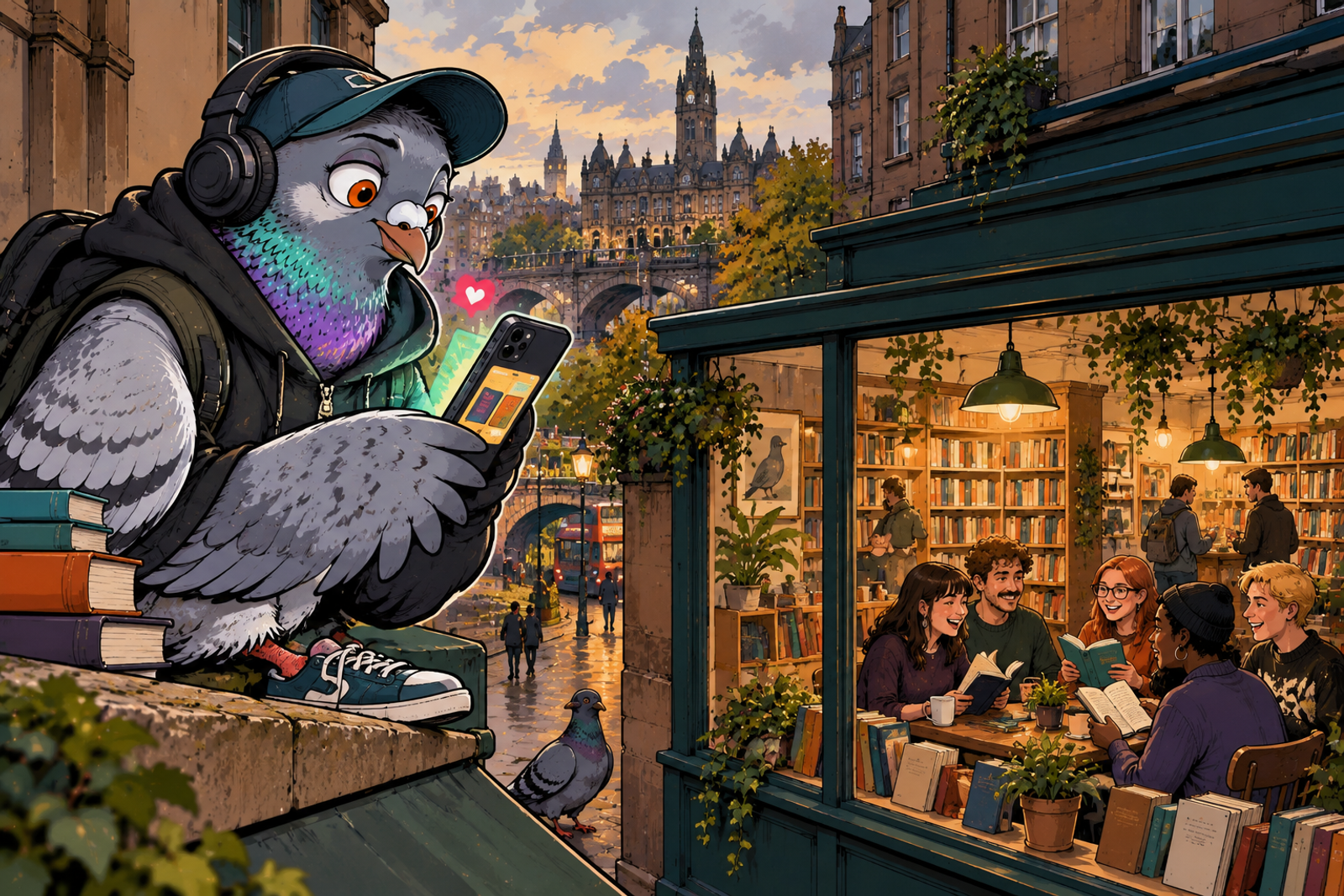
My phone has spent months telling me which books I absolutely need to read. People film themselves crying at the ending, judging fictional boyfriends and building shelves organised by colour. Somehow, an app designed to keep everybody scrolling has persuaded people to buy something with hundreds of pages and no battery.
That's BookTok, and its influence is more than a few entertaining videos. TikTok says more than 11 million UK book sales, worth £86 million, were linked to the community in 2025. Those are the platform's estimates, not a receipt for every purchase. But there is no denying that books have become something people share, recommend and argue about online, sometimes before they've even finished reading them.
Then something unexpected happens. They walk into actual shops. Waterstones said last year it was opening about ten UK bookshops a year, encouraged partly by younger readers. Independent bookshops across the UK and Ireland rose from 1,025 to 1,086 in the latest trade figures, the highest number since 2012. The Booksellers Association counted just 867 at its 2016 low. That's a striking change from the years when every other bookshop seemed to be closing.
Not every number is cheerful. NielsenIQ recorded a small fall in UK print-book spending in 2025, even as adult fiction grew. Running a shop still costs money. The comeback isn't a miracle; it's proof that particular books, readers and communities are making a difference.
There's a lovely example in Milngavie. Elaine Sinclair started the Bonnie Wee Book Club in 2021, then opened Daydreams Bookshop in 2024. A group of readers helped create the confidence for a new independent shop, and now the shop gives people more reasons to meet. That's a better high-street plot twist than another empty unit with paper over the windows.
The Times now reports that Book Club Scotland has grown from 45 to around 550 regular attendees, while Bookface Collective has more than 6,000 members. The figures are reported rather than independently audited, but they fit what I'm seeing from the awnings: reading has become a social event, not just a private hobby.
Here's the loop. A video recommends a novel. Somebody buys it, maybe from a local shop. A group chat arranges a book club. Then the people who met through a screen turn up at a table and talk face to face. That's not social media killing conversation. It's social media giving people a reason to have one.
And the brilliant thing is that it offers another kind of night out. I enjoy watching Glasgow's pubs as much as anyone, but not everybody wants to drink, shout over music or pretend they're fascinated by football. With a book club, you've already got something in common, even if you think the ending was rubbish. Someone will have annotated every page. Someone else has read four chapters and is relying heavily on charm.
For people wanting to try a bookish evening, Daydreams has author events at Charlie's Loft in Milngavie: Peter James on Monday 12 October, then Sophie Gravia with Michelle McManus on Friday 16 October, both listed for 7.30pm. Check tickets before travelling. Charlie's Loft has two flights of stairs and no lift, which is worth knowing before planning a night out.
Not everyone needs a freshly bought hardback, either. Libraries, borrowed copies, book swaps and free reading groups deserve to be part of the same conversation. A book should be the invitation, not the entrance fee.
We've spent years being told that phones would finish off reading. Turns out one corner of the internet is making books fashionable, helping bring customers into bookshops and getting people in Glasgow to meet in person. The best part is what happens when the phones go back into their pockets.